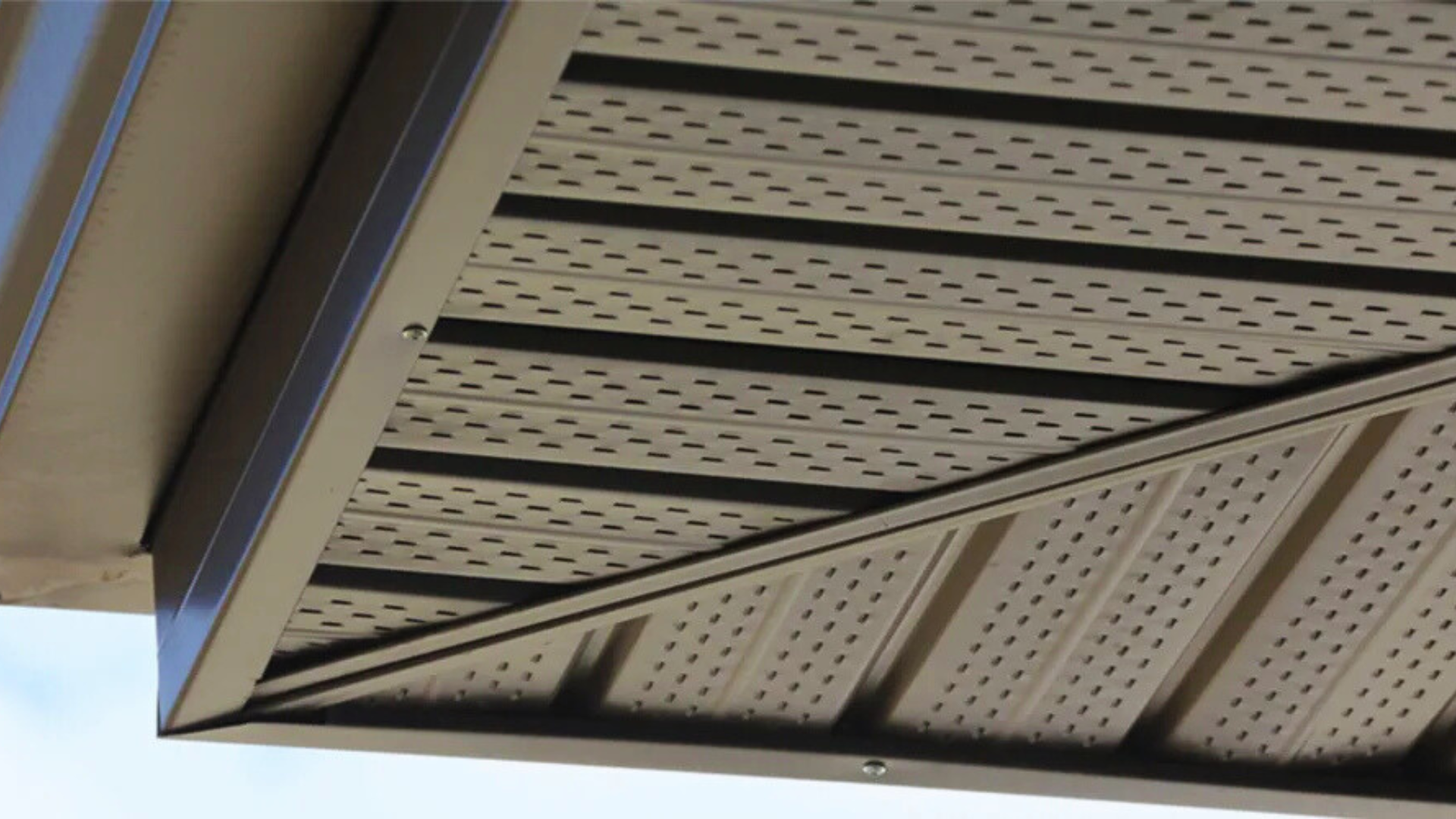
Many homeowners only notice soffit vents during roof inspections or replacement projects. If you’ve ever wondered what those small perforated panels under your roof eaves are, you’re not alone. Simply put, what is a soffit vent? A soffit vent is a perforated panel installed on the underside of roof eaves that allows fresh air to flow into the attic. These vents are critical components of a complete attic ventilation system, working in tandem with ridge vents or gable vents to maintain proper airflow.
Understanding soffit vents matters because they help prevent moisture buildup, protect your roof from heat damage, extend shingle lifespan, reduce energy costs, and minimize ice dam formation. Many homeowners don’t realize they have soffit vents until problems arise, making awareness essential.
In this guide, we’ll cover what is a soffit vent, where it’s located, how it works, the different types, benefits, maintenance tips, and how to determine how many you need. By the end, you’ll have the knowledge to inspect, maintain, or install soffit vents properly.
What Is a Soffit Vent?
Basic Definition
Soffit vents are perforated or screened openings installed in the soffit—the horizontal panels under your roof eaves. Acting as intake vents, they allow cool, fresh air to enter the attic while working with exhaust vents (like ridge or gable vents) to maintain continuous airflow. Properly installed soffit vents are essential for passive ventilation and attic health.
Understanding the Soffit First
The soffit extends from the exterior wall to the roof edge, enclosing exposed rafters and giving your home a finished appearance. Soffit vents are integrated into these panels and may be nearly invisible depending on design.
Where to Find Soffit Vents
Soffit vents run along the perimeter of your roof overhangs and are usually visible when looking up from ground level. They appear as small perforations, slots, or continuous ventilation strips.
What They Look Like
Soffit vents may be continuous panels or individual units with various perforation patterns. They are typically made of vinyl, aluminum, steel, or wood and usually match the color of the soffit. Despite their small size, soffit vents play a major role in protecting your roof, insulation, and attic environment.
How Do Soffit Vents Work?
Soffit vents work by harnessing the natural principle that hot air rises. Cooler, drier air enters the attic through the soffit vents at the bottom, while hot air escapes through ridge vents or other exhaust systems at the top. This passive ventilation creates continuous airflow, reducing heat buildup and moisture accumulation.
A proper attic ventilation system balances intake and exhaust areas, typically aiming for 1 square foot of ventilation per 150 square feet of attic space, split 50/50 between soffit and exhaust vents. Air enters through soffit vents, flows along the underside of the roof deck, absorbs heat and moisture, and exits through ridge vents. This cycle repeats continuously, keeping your attic cooler in summer, reducing ice dams in winter, and maintaining consistent attic temperature.
Without soffit vents, attics trap heat and moisture, leading to mold growth, rotting wood, premature shingle deterioration, and higher energy costs. Proper soffit vent placement ensures that your attic remains healthy, your HVAC system works efficiently, and your roof lasts longer.
Types of Soffit Vents
By Ventilation Coverage
-
Continuous/Fully Vented: Runs the full length of soffit panels; maximum airflow; ideal for large attics or humid climates.
-
Center-Vented: Perforations only in the center; moderate airflow; balance between aesthetics and ventilation.
-
Individual/Circular Vents: Installed at intervals; common for retrofits; smaller airflow but easy to add.
-
Solid Soffits: Non-vented; used when ventilation is provided elsewhere.
By Material
-
Vinyl: Affordable, lightweight, moisture-resistant, low maintenance.
-
Aluminum: Durable, corrosion-resistant, ideal for coastal areas.
-
Steel/Galvanized: Strongest, rust-resistant, premium pricing.
-
Wood: Traditional look, paintable, requires maintenance.
-
Plastic/Resin: Lightweight, moisture-resistant, UV-protected, easy to install.
Benefits of Soffit Vents
-
Moisture Control: Prevents condensation, mold, mildew, and wood rot.
-
Extended Roof Lifespan: Protects shingles and roof decking, extending life by 5-10 years.
-
Ice Dam Prevention: Maintains roof temperature, prevents icicles, and reduces winter damage.
-
Energy Efficiency: Lowers attic temperatures by 10-25°F, reducing cooling costs.
-
Protects Insulation: Keeps insulation dry and effective, maintaining R-value.
-
Structural Protection: Prevents rafter and deck damage, reduces repair costs.
-
Improved Indoor Air Quality: Reduces allergens, musty smells, and mold spores in living areas.
How Many Soffit Vents Do You Need?
The 1:150 rule is a standard guideline: 1 sq ft of ventilation per 150 sq ft of attic space. Half should be soffit vents (intake), half exhaust.
Step-by-Step Calculation:
-
Measure attic floor (length × width). Example: 50 × 30 ft = 1,500 sq ft.
-
Divide by 150 = 10 sq ft total ventilation needed.
-
Allocate 5 sq ft for soffit intake, 5 sq ft for ridge/gable exhaust.
-
Adjust for Net Free Area (NFA), accounting for screens and perforations.
Additional factors: climate, roof pitch, attic insulation, and local building codes. Professional consultation is recommended for complex roofs or retrofits.
Signs Your Soffit Vents Need Attention
-
Blocked/Clogged: Leaves, dirt, insulation, spider webs, or paint.
-
Physical Damage: Cracks, rust, rot, warped panels, missing sections.
-
Performance Issues: Hot attic, ice dams, condensation, mold, or moisture.
-
Pest Intrusion: Birds, squirrels, or insects entering vents.
Maintaining Your Soffit Vents
-
Inspect twice yearly and after storms.
-
Clean from outside (soft brush, vacuum, gentle pressure wash).
-
Clear insulation obstructions inside attic; install baffles if needed.
-
Material-specific maintenance: vinyl = wash, aluminum/steel = check rust, wood = paint/stain.
-
Call a professional for extensive damage, retrofits, or safety concerns.
Soffit Vents vs. Other Attic Ventilation
-
Ridge Vents: Exhaust at roof peak; work with soffits for complete airflow.
-
Gable Vents: Intake or exhaust on end walls; less effective alone.
-
Roof/Box Vents: Exhaust only; need soffit intake.
-
Powered Fans: Active exhaust; soffits help maintain proper passive airflow.
Installation Considerations
-
Professional installation ensures proper balance, code compliance, and safety.
-
Retrofit may require cutting into existing soffits; new construction allows planning from the start.
-
Cost: $5-$30 per individual vent; continuous panels $2-$8 per linear foot; full installation $1,500-$3,500+.
-
DIY possible for individual vents but complex for full soffit replacement.
Conclusion
Soffit vents are perforated panels under roof eaves that provide critical intake ventilation for attics. Together with ridge or gable vents, they form a complete ventilation system that prevents moisture buildup, extends roof life, reduces energy costs, and prevents ice dams. Multiple types and materials exist, including vinyl, aluminum, wood, and steel, each with unique benefits. Proper maintenance—inspections, cleaning, and clearing obstructions—ensures maximum efficiency. Calculating the number of soffit vents using the 1:150 rule and considering net free area guarantees adequate airflow. While DIY inspections and calculations help with budgeting and awareness, professional installation and verification are strongly recommended for optimal performance and code compliance. Inspect your soffit vents today to protect your home and extend your roof’s lifespan—small components that make a big difference.
Follow us on Facebook.
FAQs
-
Do all homes need soffit vents?
Not all; homes without attics or with hot roof systems may not require soffit vents. -
Can too many soffit vents cause problems?
Excess intake without balanced exhaust reduces effectiveness but is rarely harmful. -
Should every soffit panel be vented?
Not always; depends on total ventilation needs and NFA requirements. -
Can soffit vents cause drafts inside the house?
No, drafts usually indicate leaks in ceiling/attic floor, not soffit vents. -
How do I keep animals out of soffit vents?
Use built-in screens or mesh covers; steel vent guards offer extra protection.