People usually search this topic for two very practical reasons. The first is dumpster sizing during a roof tear-off, where weight limits can mean the difference between a smooth project and expensive overage fees. The second is transporting new shingles, whether loading them into a pickup truck or carrying bundles up a ladder safely. In both cases, knowing the exact weight matters more than most people realize.
Here’s the quick answer upfront: most architectural shingles weigh between 60 and 80 pounds per bundle, while traditional 3-tab shingles usually weigh 50 to 65 pounds per bundle. However, the real numbers can change depending on shingle type, brand, moisture content, and even how old the shingles are.
This guide breaks everything down clearly. You’ll find weight charts by shingle type, simple calculation methods, and real-world examples for disposal and transport. Understanding how much does a bundle of shingles weigh can also help you avoid related issues, such as water damage near chimneys that later leads to chimney flashing repair. By the end, you’ll know exactly how to plan your roofing project with confidence.
Quick Answer: Bundle Weight by Shingle Type
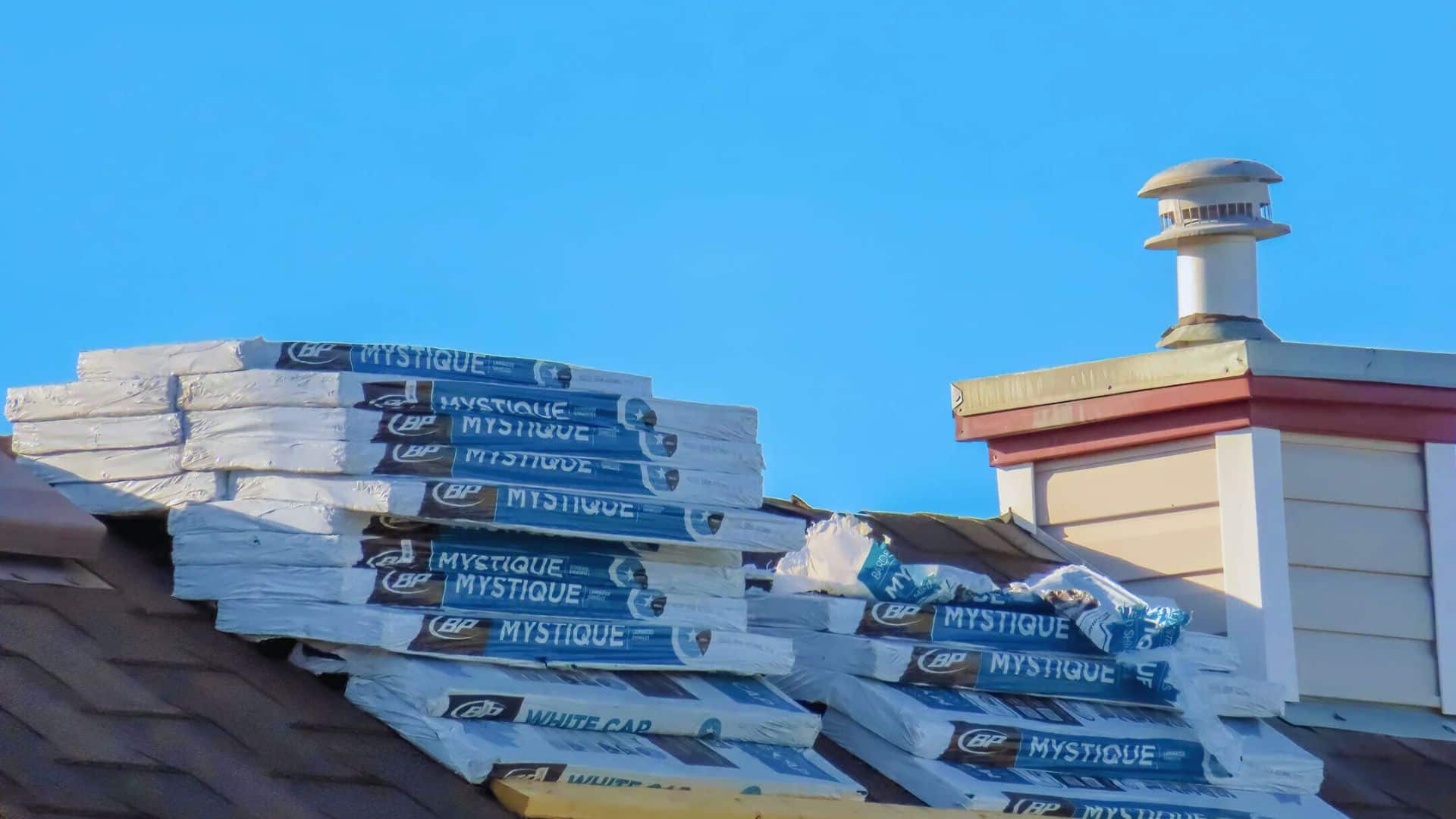
While bundle weight varies by manufacturer, roofing material, and design, most shingles fall within predictable ranges. A standard bundle typically covers about 33 square feet, meaning three bundles usually equal one roofing square (100 square feet).
Shingle Weight Comparison Table
| Shingle Type | Weight per Bundle | Weight per Square | Bundles per Square |
|---|---|---|---|
| 3-Tab Asphalt | 50–65 lbs | 230–250 lbs | 3 |
| Architectural / Dimensional | 60–80 lbs | 400–430 lbs | 3 |
| Premium / Designer | 65–90+ lbs | 450–480 lbs | 3–4 |
| Wood Shingles | 60–75 lbs | 350–400 lbs | 3 |
| Wood Shakes | 75–90 lbs | 450–500 lbs | 3 |
| Slate | 300+ lbs | 800–1,000 lbs | 3 |
| Clay / Concrete Tile | 250–350 lbs | 900–1,200 lbs | Varies |
Key points to remember:
-
One bundle covers roughly 33 square feet
-
Three bundles typically equal one roofing square
-
Weight varies by brand and product line
Knowing these numbers helps with everything from delivery planning to avoiding underestimated chimney flashing repair cost caused by rushed installations.
Understanding Roofing Measurements
What Is a Bundle?
A bundle is a packaged unit of shingles designed for easier transport and handling. Most bundles cover about 33.3 square feet. The number of shingles inside varies by type—3-tab shingles usually have more individual pieces per bundle than architectural shingles.
What Is a Square?
A roofing square is an industry-standard measurement equal to 100 square feet of roof coverage. Contractors prefer squares because they make estimating materials, labor, and disposal weight easier and more consistent.
The 3-Bundle Rule
Most standard asphalt shingles are packaged so that three bundles equal one square. However, premium and designer shingles may require four or more bundles per square.
Examples:
GAF Timberline HD: 3 bundles per square
CertainTeed Landmark: 3 bundles per square
Premium designer shingles: 4–5 bundles per square
This distinction is critical when calculating total roof weight and planning dumpster capacity.
Detailed Weight Breakdown by Shingle Type
3-Tab Asphalt Shingles
3-tab shingles weigh 50–65 pounds per bundle. They are lighter because they use a single asphalt layer and thinner construction. Each bundle usually contains 26–29 shingles. These are best for budget-friendly projects and simple roof designs.
Architectural / Dimensional Shingles
Architectural shingles are heavier, ranging from 60–80 pounds per bundle due to multi-layer construction. Bundles typically contain 20–22 shingles.
Popular examples:
GAF Timberline HDZ: ~67 lbs per bundle
Owens Corning Duration: ~68 lbs per bundle
CertainTeed Landmark: ~65 lbs per bundle
This is the most common residential choice today.
Premium / Designer Shingles
Premium shingles can weigh 65–90+ pounds per bundle and often require four or more bundles per square. Their added thickness improves durability and wind resistance.
Wood Shingles & Shakes
Wood shingles weigh 60–75 pounds per bundle, while shakes range from 75–90 pounds. Weight varies by wood species, such as cedar or redwood.
Slate Shingles
Slate is extremely heavy, often 300 pounds or more per bundle, and requires structural reinforcement. Its long lifespan offsets its weight.
Tile Roofing (Clay / Concrete)
Concrete tiles weigh 250–300 pounds per bundle, while clay tiles can reach 350 pounds. Coverage varies widely, making careful calculation essential.
Factors That Affect Shingle Weight
Several variables influence how much a bundle actually weighs.
Material composition matters—fiberglass mat shingles weigh less than organic-based ones. Shingle thickness also plays a role, with laminated shingles being heavier than single-layer designs. Size and shape can add weight, especially with designer cuts.
Manufacturing differences between brands can change bundle weight even for similar shingles. Age and condition matter too: old shingles often weigh 10–15% less due to granule loss. However, moisture can reverse this—water-soaked shingles can weigh 15–20% more, which significantly affects disposal planning and can increase chimney flashing repair near me costs if drainage problems are ignored.
Why You Need to Know Shingle Weight
Dumpster Sizing for Tear-Offs
This is the number-one reason people search how much does a bundle of shingles weigh. Dumpster overage fees often range from $75–$150 per ton.
Example calculation:
Roof size: 1,600 sq ft = 16 squares
Shingle type: Architectural (240 lbs per square)
Base weight: 16 × 240 = 3,840 lbs
Two layers: 7,680 lbs
Add 10% waste: 8,448 lbs (≈4.2 tons)
Recommended dumpster: 20-yard
Transporting New Shingles
Bundle weight affects vehicle payload limits and safe ladder carrying. Overloading trucks or carrying heavy bundles improperly can cause injuries or damage materials.
Structural Considerations
Heavier materials increase roof load. Switching from asphalt to tile or slate may require structural upgrades to meet building codes.
How to Calculate Total Roof Weight
Method 1: From Roof Size
Start by measuring the total roof square footage. Divide this number by 100 to determine the number of roofing squares. Multiply the number of squares by the weight per square for your shingle type, then add 5–10% to account for waste.
Method 2: From Bundles
Estimate the total number of bundles needed for the roof. Multiply this number by the average weight per bundle, and be sure to account for multiple layers if present.
Method 3: From Individual Shingles
Check the weight of a single shingle, then multiply by the number of shingles per bundle. Finally, multiply by the total number of bundles required for the roof.
Using these methods helps ensure accurate weight calculations and prevents mistakes that could lead to unexpected costs, such as flashing chimney repair, during or after roofing projects.

Choosing the Right Dumpster Size
| Dumpster Size | Typical Capacity |
|---|---|
| 10-Yard | 10–15 squares |
| 20-Yard | 20–30 squares |
| 30-Yard | 30–40 squares |
| 40-Yard | 40+ squares or heavy materials |
Weight limits matter more than volume. Moisture, multiple layers, and mixed debris can push loads over limits quickly.
Pallet Information
Shingle pallets typically hold 20–50 bundles. Asphalt shingle pallets weigh 1,500–3,000 pounds, while slate or tile pallets may exceed 5,000 pounds. Delivery often requires forklifts or cranes and stable ground surfaces.
Safe Handling and Transportation Tips
Always lift bundles using your legs, not your back. Two-person carries are recommended for bundles over 80 pounds. When transporting, check vehicle payload capacity and secure loads properly. On roofs, distribute weight evenly to avoid deck stress and reduce risks around vulnerable areas like chimneys that may later need flashing chimney repair.
Brand-Specific Weight Examples
GAF offers Timberline HD at 240 lbs per square, Timberline HDZ at 245 lbs per square, and the heavier Grand Sequoia at 340 lbs per square. CertainTeed provides Landmark shingles weighing 235–240 lbs per square, Landmark Pro at 250 lbs per square, and the premium Grand Manor at 390 lbs per square. Owens Corning shingles include Duration at 240 lbs per square and Oakridge at 235 lbs per square. It is important to always verify current specifications, as formulations and weights can change over time.
Common Mistakes to Avoid
Many homeowners underestimate moisture weight, forget multiple layers, or ignore waste factors. Assuming all bundles weigh the same across brands is another costly mistake. Ordering a dumpster too small often leads to overage fees, while failing to check vehicle payload limits can cause safety issues. Mixing old and new weight estimates also leads to miscalculations that affect disposal and planning.
Cost Implications
Heavier shingles increase material, transport, and disposal costs. Larger dumpsters, possible structural reinforcement, and added labor all affect budgets.
Typical costs per bundle:
-
3-tab: $20–35
-
Architectural: $30–50
-
Premium: $50–80+
-
Specialty materials: $100–300+
Conclusion
Most homeowners will work with bundles weighing 60–80 pounds for architectural shingles and 50–65 pounds for 3-tab shingles. Accurate calculations are essential for transport, disposal, and safety. Always verify manufacturer specifications, account for moisture and waste, and consult professionals when unsure. Knowing these details prevents costly mistakes and protects your project from unnecessary delays.
FAQs
How much does a bundle of shingles weigh on average?
Most architectural shingles weigh 60–80 lbs per bundle, while 3-tab shingles weigh 50–65 lbs.
How many shingles are in a bundle?
3-tab bundles usually contain 26–29 shingles, while architectural bundles contain about 20–22.
How many bundles of shingles do I need?
Divide roof square footage by 33, then add about 10% extra for waste.
What is a square of shingles?
A roofing square equals 100 square feet of coverage and typically requires three bundles.
Does moisture affect shingle weight?
Yes. Water-soaked shingles can weigh 15–20% more than dry shingles, especially during tear-offs.