Installing a new roof is an exciting but often stressful project for homeowners. Between scheduling contractors, preparing your home, and managing daily disruptions, one of the most common questions people ask is how long the process will actually take. Knowing the timeline helps with planning work schedules, parking, pets, and even conversations with neighbors.
Homeowners want clear expectations because roofing work affects daily life. Noise, debris, and limited access to parts of the property can be inconvenient—but temporary. Understanding the timeline reduces uncertainty and prevents frustration.
The quick answer is that most residential roofs are installed in 1–2 days, but that’s only a general estimate. Roof size, material choice, weather conditions, and roof complexity can significantly change the schedule.
In this guide, we’ll break down exactly how long does it take to install a roof, what affects installation speed, how timelines vary by roofing material, and what happens before, during, and after installation. By the end, you’ll know what to expect and how to prepare for a smooth roofing project.
Quick Answer: Average Roof Installation Timeframes
For homeowners wondering how long does it take to install a roof, the answer is often shorter than expected—but it depends on home size, roof complexity, and materials.
A. Standard Residential Roof Installation Times
-
Average homes (2,000–3,000 sq ft) with asphalt shingles usually take 1–2 days to install.
-
Small homes under 1,000 sq ft can often be completed in 1 day or less.
-
Larger homes (3,500+ sq ft) typically require 2–4 days.
-
Complex roofs with premium materials or intricate designs may take 5 days to over 2 weeks.
-
Commercial roofs vary widely, often taking 1–5+ weeks, depending on size and roofing system.
These estimates assume favorable weather, an experienced crew, and no hidden structural issues.
B. Total Project Timeline vs. Installation Time
It’s crucial to distinguish between the actual installation and the overall project timeline.
-
Physical roof installation: usually 1–3 days
-
Full project timeline: often 2–3 weeks
The full timeline includes pre-installation steps like consultation, material selection, permits, scheduling, delivery, and inspections. Many homeowners asking how long does it take to install a new roof are surprised to learn that the physical work is just a fraction of the process. Proper planning and scheduling are essential to ensure a smooth installation and minimize disruptions.
Understanding this distinction helps homeowners set realistic expectations and plan for logistics, budgeting, and temporary disruptions during the roofing project.
Installation Timeline by Roofing Material
The time it takes to install a roof varies significantly depending on the material used. Here’s a breakdown of typical installation timelines for popular roofing options.
A. Asphalt Shingles (Most Common)
Asphalt shingles are the fastest to install and the most popular choice among homeowners.
-
Installation time: 1–2 days for an average 2,000–3,000 sq ft home
-
Range: 1–3 days depending on roof size and complexity
These shingles come in large bundles, and the straightforward installation process allows crews to work efficiently.
-
Lifespan: 15–30 years
-
Cost: Most affordable option
B. Architectural / Dimensional Shingles
Thicker and heavier than standard 3-tab shingles, architectural shingles take slightly longer to install.
-
Installation time: 1–3 days
-
Lifespan: 25–30 years
The extra time accounts for careful alignment and placement to ensure aesthetic appeal and durability.
C. Metal Roofing
Metal roofs require more precision during installation.
-
Installation time: 2–7 days
-
Standing seam metal: 3–7 days
-
Metal panels/shingles: 2–4 days
Homeowners often ask how long does it take to install a metal roof, as these systems last 40–70+ years, making the longer installation time worthwhile. Proper panel alignment, specialized fasteners, and tools contribute to the extended timeline.
D. Cedar Shake / Wood Shingles
Installed individually, cedar shakes require meticulous placement for proper airflow.
-
Installation time: 4–8 days
-
Lifespan: 20–40 years
-
Cost: Premium
E. Slate or Tile Roofing
Heavy, fragile materials like slate or clay/concrete tiles demand precise handling and sometimes structural reinforcement.
-
Installation time: 5–10+ days (up to 2 weeks)
-
Lifespan: 50–100+ years
-
Cost: Highest
F. Synthetic / Composite Shingles
Installed similarly to cedar shakes, synthetic shingles are durable but labor-intensive.
-
Installation time: 5–7 days
-
Lifespan: 50+ years
G. Flat / Low-Slope Roofing
Common for commercial buildings or residential additions, these roofs use materials like TPO, EPDM, or modified bitumen.
-
Installation time: 2–5 days
Understanding the installation timeline for your chosen material helps homeowners plan effectively, especially when considering how long does it take to install a new roof or specialized systems like metal roofing.
Major Factors That Affect Installation Time
Several factors influence how long it takes to install a roof, and understanding them helps homeowners set realistic expectations.
A. Roof Size and Square Footage
Roofing work is measured in squares, with one square equaling 100 square feet. Naturally, the more squares your roof has, the longer it will take to install:
-
Small roofs (10–15 squares): typically 1 day
-
Average roofs (20–30 squares): 1–2 days
-
Large roofs (40+ squares): 3 or more days
It’s important to note that roof size differs from home square footage due to pitch, design complexity, and additional features like dormers.
B. Roof Pitch (Steepness)
The steepness of your roof directly affects safety and speed.
-
Low-pitch roofs (3/12 or less) are easiest to navigate and fastest to install.
-
Medium-pitch roofs (4/12–8/12) follow a standard pace.
-
Steep roofs (9/12 or greater) slow work significantly because safety equipment, harnesses, and scaffolding are required. Material transport and precise placement also take longer.
C. Roof Complexity
Complex architectural features add installation time. Valleys, hips, ridges, dormers, skylights, multiple chimneys, and multi-story designs require detailed flashing work and precise cuts, often extending timelines by hours or even full days.
D. Roof Accessibility
Limited access can slow material delivery and debris removal. Tight urban lots, dense landscaping, fencing, or narrow driveways all complicate logistics and add time.
E. Existing Roof Condition
Unexpected damage is a common delay factor:
-
Multiple old layers: adds 0.5–1 day for tear-off
-
Rotted decking: +1–3 days for repairs
-
Structural issues: variable depending on severity
F. Weather Conditions
Dry, mild conditions are ideal. Rain, high winds, extreme heat, snow, or ice can halt work or slow progress.
G. Time of Year
Longer daylight hours in spring and summer allow crews to work longer days, while shorter winter days may extend project duration.
H. Crew Size and Experience
Experienced crews (4–8 workers) are efficient and minimize errors. DIY installations or understaffed teams can take weeks or months.
I. Permits and Inspections
Required building permits, HOA approvals, or historic preservation restrictions can delay the start of a project by days or weeks.
By considering these factors—size, pitch, complexity, accessibility, condition, weather, crew, and permits—homeowners gain a realistic understanding of how long it takes to install a roof.
The Complete Roof Installation Process Timeline
A successful roof installation involves more than just laying down shingles or panels. Understanding the complete timeline helps homeowners plan effectively and avoid surprises. Here’s what to expect from start to finish.
A. Pre-Installation Phase (1–2 Weeks Before)
The pre-installation phase sets the foundation for a smooth project. It includes:
-
Initial consultation and estimate: A roofing contractor evaluates your roof, discusses material options, and provides a quote.
-
Material selection: Homeowners choose shingles, metal panels, tiles, or other materials.
-
Scheduling: Contractor availability is confirmed, and start dates are established.
-
Permits: Necessary building permits are obtained, which can take 1–7 days depending on your locality.
-
Material delivery: Roofing materials are ordered and delivered to the site, often 1–2 days before work begins.
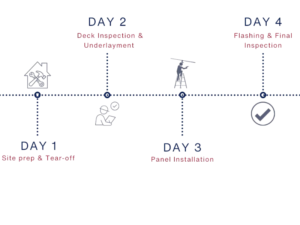
B. Day 1: Tear-Off and Preparation
The first day of physical work typically involves:
-
Crew arrival and setup: Safety measures, tarps, and ground protection are put in place.
-
Old roof removal: Existing roofing materials are stripped away.
-
Deck inspection and repairs: Roof decking is checked for rot or damage and repaired as needed.
-
Underlayment installation: Weather-resistant underlayment may be partially installed if time allows.
C. Day 2: Installation (If Needed)
This day focuses on actual roofing materials:
-
Shingles, tiles, or metal panels installation
-
Flashing installation around chimneys, vents, and valleys
-
Ridge cap and ventilation installation to ensure proper airflow
D. Final Day: Completion and Cleanup
-
Final installation touches
-
Quality inspection by the crew
-
Site cleanup and debris removal
-
Magnet sweep for nails
-
Homeowner walkthrough to review the completed roof
E. Post-Installation (1–3 Days After)
After work is finished:
-
Final building inspection (if required by local authorities)
-
Warranty registration for materials and workmanship
-
Final payment to the contractor
By understanding each phase—from pre-installation planning to post-installation inspections—homeowners can anticipate the workflow and ensure their roofing project stays on schedule.
Potential Delays and How to Minimize Them
Even with careful planning, several factors can extend your roof installation timeline. Weather delays are the most common cause—rain, high winds, snow, or extreme heat can halt work for hours or days. Roofing crews prioritize safety and material integrity, so wet or icy conditions often mean a temporary pause.
Hidden damage discovered during tear-off, such as rotted decking, water-damaged rafters, or pest infestations, can also add days to the project. While these issues are sometimes unavoidable, they can be minimized through a thorough pre-inspection of the attic and roof structure.
Material delays or shortages are another potential hurdle. Popular roofing materials can sometimes be backordered, especially in peak season, which can push your project start date back. Similarly, permit and inspection requirements—especially for historic homes or areas with strict building codes—may add days or even weeks if not obtained in advance.
To minimize delays:
-
Hire experienced, licensed contractors with a proven track record.
-
Schedule your project during favorable weather seasons in your region.
-
Confirm material availability before signing a contract.
-
Build flexibility into your timeline to accommodate unforeseen circumstances.
If work must pause mid-project, professional contractors always protect your home by tarping exposed areas and securing materials. This ensures your property stays safe and dry until work can safely resume, helping prevent additional damage or costs.
Special Considerations
Several factors can influence how long your roof installation takes beyond standard residential projects. New construction roofs are generally faster to install because there’s no old roofing to remove, no hidden damage to repair, and work can proceed in a coordinated sequence with other trades. This often shortens the timeline compared to replacement projects.
Partial roof replacements or spot repairs are typically quicker, often taking only a few hours to a single day. These smaller projects are less disruptive and involve fewer materials and less debris removal.
Commercial roofs usually require more time due to their larger size, unique materials, and complex systems such as TPO, EPDM, or metal panels. Installers may also need to work around business operations, which can extend the timeline.
Historic or landmark homes present additional challenges. These projects often require special approvals, preservation techniques, or custom materials to match the original roof. Permitting and compliance with local regulations can add days or even weeks to the schedule.
Understanding these special considerations ensures homeowners have realistic expectations and can plan accordingly for their specific roofing project.
Preparing for Your Roof Installation
Proper preparation before your roof installation helps the project run smoothly and minimizes stress for everyone involved. Start by clearing your driveway and access areas so roofing crews can park trucks, unload materials, and place dumpsters safely. Take time to protect landscaping by trimming branches and covering delicate plants near the home.
Inside your house, remove or secure wall décor, mirrors, and shelves, as vibrations from hammering can cause items to shift or fall. In the attic, cover stored belongings with plastic sheets to protect them from dust or small debris that may fall during the installation.
It’s also courteous to inform your neighbors ahead of time about the project, especially since roofing work is noisy and often starts early in the morning. If you have pets, plan to keep them indoors or off-site, as loud noises and unfamiliar workers can cause anxiety or escape risks.
Expect temporary disruption, including noise, vibrations, and debris around your home. Preparing in advance ensures a safer environment and helps the roofing project stay on schedule.
Red Flags: When Timeline Seems Too Good or Too Bad
A roofing timeline that sounds too good to be true often is. Contractors who promise extremely fast completion may rush critical steps like proper underlayment installation, flashing work, or cleanup, which can lead to long-term problems and voided warranties. Speed should never come at the cost of quality or safety.
On the other hand, an unusually long or vague timeline can also be a red flag. Excessive delays may indicate poor project planning, limited crew availability, or overbooking multiple jobs at once. This can leave your home exposed to weather damage for extended periods.
To protect yourself, always ask for a written project schedule that includes start dates, estimated completion, and contingencies for weather or material delays. A reputable contractor will provide realistic timelines, communicate clearly, and update you promptly if changes occur. Transparency and planning are key indicators of professionalism and reliability.
Questions to Ask Your Roofing Contractor
Before hiring a roofing contractor, asking the right questions can protect you from delays, hidden costs, and poor workmanship. Start by asking about crew size and experience—a larger, skilled crew often completes jobs faster and more efficiently. Clarify who will be on-site daily and whether subcontractors will be used.
Next, discuss project timelines. Ask for a written schedule that outlines start and completion dates, and how delays will be handled. Weather is a major factor in roofing, so ask about their weather contingency plan and how your home will be protected if rain or storms interrupt the job.
Hidden damage is another critical topic. Ask how they handle unexpected issues like rotten decking or damaged flashing, and whether they’ll provide photo documentation and updated estimates before proceeding.
Don’t forget to ask about warranties and guarantees. Confirm what’s covered under workmanship warranties versus manufacturer material warranties. Finally, request everything in writing—estimates, timelines, scope of work, and payment terms. A professional roofer will welcome these questions and provide clear, transparent answers, giving you confidence before work begins.
Conclusion
Most residential roofs are installed in 1–3 days, but materials, weather, and complexity matter. Understanding how long does it take to install a roof helps homeowners plan realistically and avoid stress. Quality work takes time, and experienced professionals ensure the job is done right. Get a detailed timeline from your contractor and prepare ahead for a smooth installation.
Follow us on Facebook.
FAQs
1. How long does it take to install a new roof?
Most homes take 1–3 days for installation, but the full project may span 2–3 weeks.
2. Can a roof be installed in one day?
Yes, small or simple asphalt roofs can often be completed in a single day.
3. How long does it take to install a metal roof?
Metal roofs usually take 2–7 days depending on design and roof complexity.
4. Does weather delay roof installation?
Yes. Rain, wind, heat, and cold can pause or slow roofing work.
5. Is faster roof installation always better?
No. Rushing can reduce quality. Proper installation matters more than speed.