If you’ve ever reviewed a roofing estimate and felt confused by the term “squares,” you’re not alone. Many homeowners pause when contractors start talking in numbers that don’t match their home’s listed square footage. The most common question that follows is simple: how big is a roofing square?
Here’s the direct answer upfront: one roofing square equals 100 square feet, which is the same as a 10-foot by 10-foot area. This measurement has nothing to do with the shape of your roof and everything to do with surface area.
Understanding roofing squares matters more than you might think. It helps you read quotes accurately, compare bids from different contractors, budget realistically, and communicate clearly during your roofing project. Without this knowledge, it’s easy to misunderstand costs or assume a quote is inflated when it’s actually standard.
In this guide, you’ll learn exactly what a roofing square is, how to visualize it, how to calculate roofing squares for your own roof, how many materials each square requires, and how squares directly impact overall roofing costs. This terminology is an industry-wide standard used by contractors, suppliers, and manufacturers across the country.
What Is a Roofing Square? (The Simple Definition)
The Basic Answer
A roofing square is a unit of measurement equal to 100 square feet of roof area. Think of it as a 10-foot by 10-foot section laid flat. Roofing professionals across the industry rely on this measurement because it keeps calculations simple and consistent.
While it’s related to square footage, a roofing square is not the same thing. Square footage measures total area, while squares group that area into easy-to-manage units. For example, instead of saying a roof is 3,000 square feet, contractors say it’s 30 squares.
Why Roofing Squares Matter
Roofing squares make communication clearer between homeowners, contractors, and suppliers. Saying “30 squares” is easier than “3,000 square feet,” especially when pricing materials and labor. Roofing products—from shingles to underlayment—are sold and priced by the square, not by the individual piece.
Using squares helps prevent under-ordering or excessive waste. Accurate square counts are essential for estimates, deliveries, and project timelines.
Visual Comparison
To visualize one roofing square, imagine:
-
A large bedroom or small home office
-
A standard one-car garage floor
-
A 10×10 bedroom or shed footprint
These comparisons help make the abstract number feel more concrete.
Not Literal Squares
Despite the name, a roofing square doesn’t have to be square-shaped. A 5×20 section or a 4×25 section both equal one roofing square. It’s about total area, not geometry.
The History & Purpose of Roofing Squares
Roofing squares date back to the early days of standardized construction materials. Before modern measuring tools, working with large square-foot numbers was cumbersome. Grouping area into 100-square-foot units made planning faster and more accurate.
As roofing materials became mass-produced, manufacturers needed a consistent way to package and price products. Roofing squares solved that problem. Today, shingles, underlayment, and labor estimates are all based on this shared standard.
For contractors and suppliers, squares create uniform pricing nationwide. For homeowners, they simplify comparisons between quotes and make it easier to estimate costs independently. Understanding how big is a roofing square empowers homeowners to verify measurements instead of relying blindly on estimates.
How to Calculate Roofing Squares for Your Roof
The Basic Formula
The formula is straightforward:
Total roof square footage ÷ 100 = roofing squares
For example:
-
2,500 sq ft ÷ 100 = 25 squares
-
3,000 sq ft ÷ 100 = 30 squares
Step-by-Step Calculation Method
Step 1: Measure Your Home’s Footprint
Walk the perimeter and count strides. An average stride is 2.5–3 feet. Multiply length by width to estimate footprint.
Example: 50 × 60 = 3,000 sq ft.
Step 2: Measure Each Roof Section
For simple gable roofs, measure each plane separately. Multiply length by width, then add them together.
Example: Two planes at 30 × 50 = 3,000 sq ft each = 6,000 total.
Step 3: Account for Roof Pitch
Steeper roofs have more surface area. Apply a multiplier:
-
Low pitch (3/12–4/12): 1.05–1.1
-
Medium pitch (5/12–8/12): 1.15–1.3
-
Steep pitch (9/12+): 1.4–1.6
Step 4: Factor in Complexity
Dormers, valleys, hips, and overhangs add area. Add 10–15% for complex roofs.
Step 5: Divide by 100
Divide final square footage by 100 and always round up.
Important Note: DIY calculations provide rough estimates only. Professional measurements are always more accurate.
Why You Can’t Use Your Home’s Square Footage
A common mistake is assuming roof size equals home square footage. This is rarely true. Roof pitch alone can increase surface area by 30–60%. Overhangs extend beyond exterior walls, adding more area not included in livable space.
Dormers, garages, porches, and unfinished attics also require roofing but aren’t counted in home square footage. Multi-story homes complicate things further, since roof area only covers the top level.
For example, a 2,000 sq ft home with moderate pitch may have 2,600–2,800 sq ft of roof area. That equals 26–28 squares, not 20. Understanding how big is a roofing square helps avoid costly miscalculations.
Materials Needed Per Roofing Square
For standard asphalt shingles, three bundles typically equal one roofing square. Each bundle weighs 60–80 pounds, resulting in 63–87 shingles per square.
Architectural shingles usually still require three bundles, while luxury shingles may need four to six bundles per square due to thickness and weight.
Other materials vary:
-
Metal roofing: depends on panel size
-
Cedar shakes: 4–5 bundles per square
-
Slate: 4–6 bundles per square
-
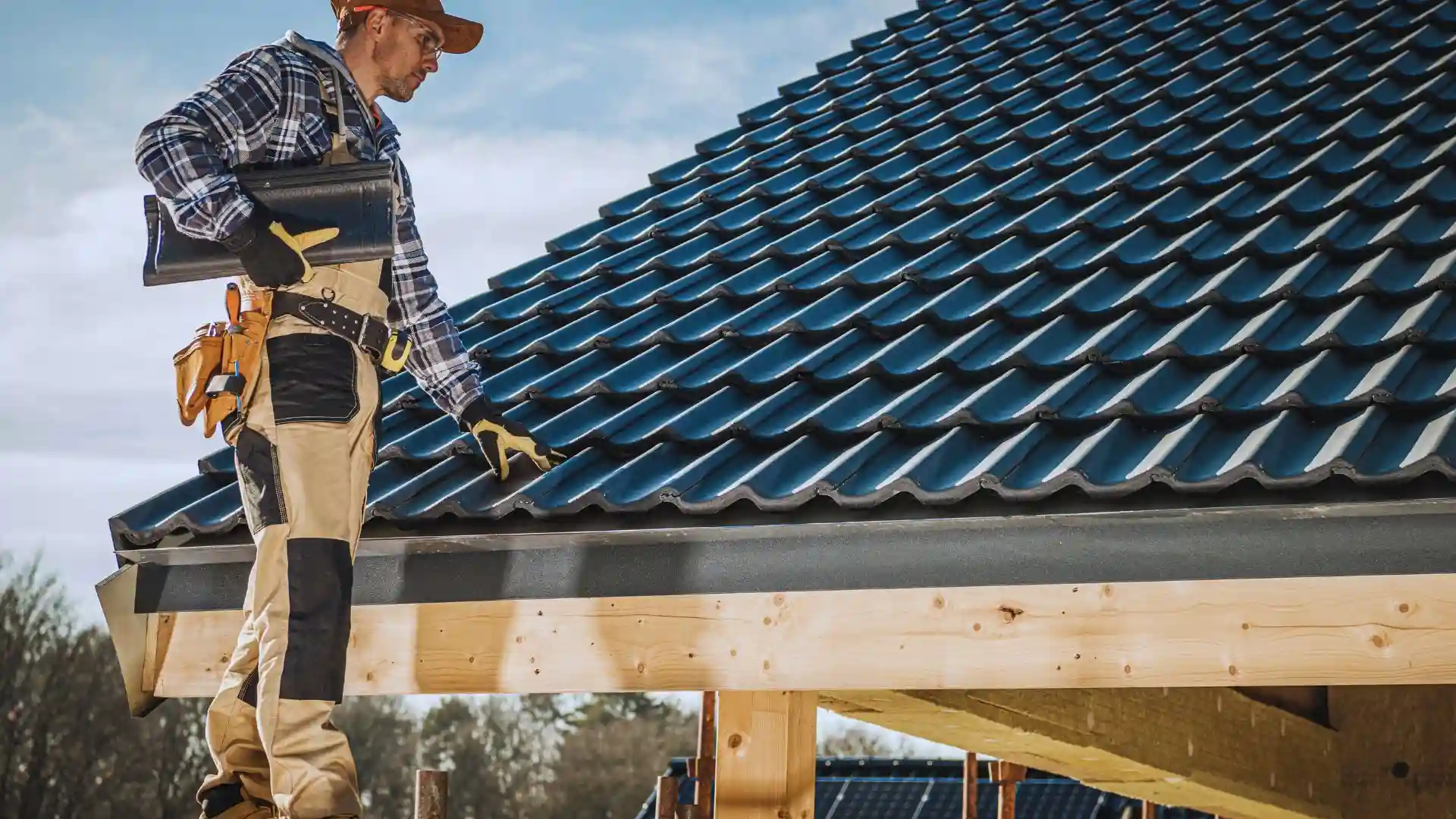
Clay or concrete tiles: 80–100 tiles per square
Add additional materials like underlayment, nails, flashing, and ridge caps per square. Always include waste: 10% for simple roofs and up to 20% for complex designs.
How Roofing Squares Impact Cost
Material costs are quoted per square. Asphalt shingles range from $100–$400 per square (materials only), while slate can exceed $1,500 per square. Labor is also priced per square, often $150–$350 depending on complexity and pitch.
Installed costs typically range:
-
Budget roofs: $350–$450 per square
-
Mid-range: $450–$650 per square
-
Premium: $650–$1,200+ per square
A small miscalculation of five squares can mean a $2,000–$3,000 difference, which is why knowing how big is a roofing square directly impacts budgeting accuracy.
Different Roof Types & Square Calculations
Simple gable roofs are easiest to calculate. Hip roofs add complexity and typically 10–15% more area. Multi-plane and mansard roofs often require professional measurement due to multiple sections.
Flat and low-slope roofs are closest to home footprint but still include overhangs. Shed roofs are simple but must account for extensions or dormers.
Common Mistakes When Calculating Roofing Squares
Homeowners often forget pitch, overhangs, waste factors, or architectural features. Rounding down instead of up is another costly error. These mistakes can cause delays, extra delivery fees, and mismatched materials.
To avoid issues, measure carefully, add waste, and rely on professional estimates when ordering materials.
Professional Measurement vs. DIY Calculation
Professionals use satellite imagery, drones, and laser tools for accuracy within 1–2%. DIY calculations are helpful for budgeting and understanding quotes, but not for ordering materials.
The best approach is using DIY estimates for planning and professional measurements for final decisions. Always compare multiple quotes and question major discrepancies.
Conclusion
So, how big is a roofing square? It’s always 100 square feet, typically visualized as a 10×10 area. This measurement is essential for understanding roofing quotes, budgeting accurately, and ordering the right materials.
Home square footage can’t be used to estimate roof size because pitch, overhangs, and architectural features significantly increase surface area. Most homes fall between 15 and 30 squares, while larger or complex roofs may exceed 50.
For accurate results, professional measurement is strongly recommended. Get multiple quotes, verify square counts, and use this knowledge to communicate confidently with contractors before starting your roofing project.
Follow us on Facebook.
FAQs
Q: How many bundles of shingles are in a roofing square?
A: Usually 3 bundles for standard shingles; luxury shingles may need 4–6 bundles.
Q: Is a roofing square always 10×10 feet?
A: It’s always 100 sq ft total, but dimensions can vary.
Q: How many squares does a typical house have?
A: Most homes range from 15–30 squares, depending on size and pitch.
Q: Can I calculate roofing squares from the ground?
A: You can estimate, but professional measurement is more accurate.
Q: Why do roofers use squares instead of square feet?
A: It simplifies pricing, communication, and material ordering.